
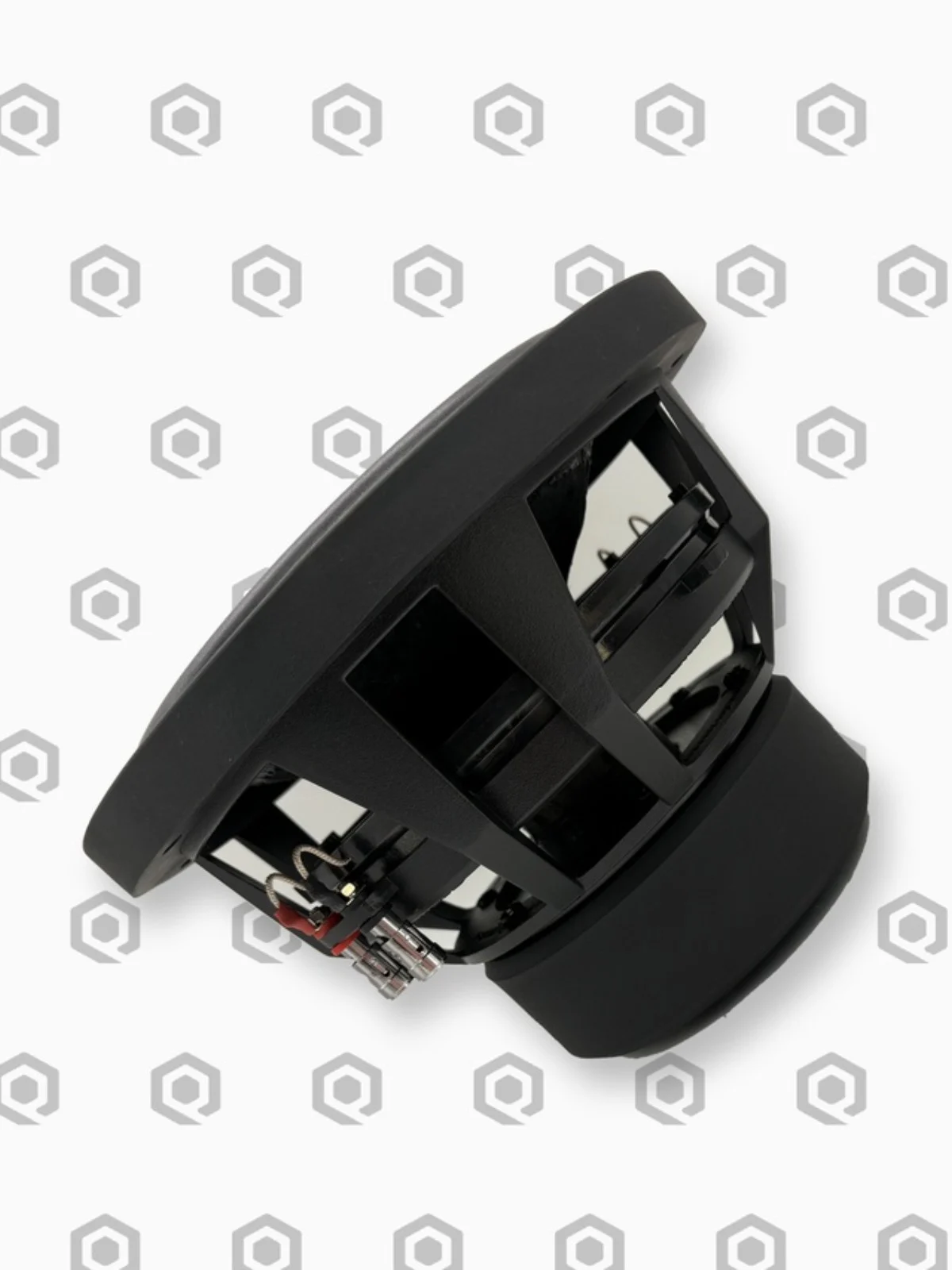
Regular cab trucks are the hardest vehicles we get in the bay for bass. There’s no trunk, no back seat, and the space behind the bench is usually a few inches deep. On top of that, the cab is a small box made of glass and sheet metal, so it rattles if you look at it wrong.
The good news: that small cab also works in your favor. A tiny cabin pressurizes fast, and a well-chosen sub in a well-built box can hit harder in a single cab than the same setup in an SUV. You just have to plan around the space instead of fighting it.
Here’s how we approach truck sub installs, from measuring the space to picking the sub, box and amp.
Start With a Tape Measure, Not a Shopping Cart
Every truck is different, and even the same model changes between generations. Before you pick a sub, measure the real space you have. Slide the seat all the way back and recline it to where you actually drive. Then measure:
- Depth at the top and at the floor (the back wall usually isn’t vertical)
- Height from the floor to where the seatback meets the rear wall
- Width between the door jambs or seat belt hardware
- Anything in the way: jack kits, seat belt retractors, rear vents, wiring harnesses
Write those numbers down and give yourself a quarter inch of slack on each side for carpet and fasteners. If the depth at the top is under 4 inches, you’re looking at a shallow-mount setup or an under-seat location. If you’ve got 6 inches or more, a normal-depth 8″ or 10″ in a slim sealed box is usually doable.
Where the Sub Can Go in a Truck
There are really four places subs end up in pickups. Which one makes sense depends on cab size and how much you want to give up.
Behind the seat (regular cab)
The classic spot. You’ll build or buy a shallow, angled box that follows the back wall. You lose seat recline, and sometimes an inch or two of seat travel. Most single cabs can fit one or two 8s or 10s here if the box is designed for the specific truck.
Under the rear seat (extended and crew cab)
Fold-up rear seats leave a cavity that’s perfect for a slim box. Sub-under-seat setups keep the cab usable and hidden, which is a big deal if the truck hauls people or gear daily.
Rear floor or rear seat (crew cab)
If you’re willing to give up rear floor space, a crew cab opens up options a regular cab never will. A full-size ported box fits, and you can run bigger subs and more power.
In the bed
We don’t recommend this for daily drivers. Bass in the bed has to travel through the rear glass and sheet metal to reach you, and you’re fighting weather and theft. It’s fine for show trucks, not for the guy who wants to hear his music on the way to work.
Picking the Right Sub Size
In a truck, the box volume you can fit decides the sub, not the other way around. A 12″ that’s crammed into a box half the size it wants will sound worse than a 10″ in the right box. Here’s how it generally breaks down for behind-seat and under-seat installs:
| Cab Type | Typical Space | Realistic Sub Choice | Box Style |
|---|---|---|---|
| Regular cab, tight | Under 4″ deep | Shallow 8″ or 10″ | Sealed, truck-specific |
| Regular cab, average | 5–7″ deep | One or two 8s or 10s | Sealed, angled |
| Extended cab | Under-seat cavity | One or two 8s or 10s | Sealed or small ported |
| Crew cab, floor | Full rear floor | 10s, 12s, even 15s | Ported or sealed |
For most regular cab builds, a 10″ is the sweet spot. It moves enough air to fill the cab, it fits behind more seats than a 12″, and it’s quick enough to keep up with fast music. If you need help comparing sizes, our Woofer Lookup tool lets you pull up specs side by side.
Our go-to subs for trucks
The HDS2.3 10″ Dual 2 Ohm (800W RMS / 1,600W Max) is one we reach for a lot. It’s a strong daily sub, it doesn’t need a massive amp, and a pair of them behind the seat will shake a single cab more than most people expect.
If you’re short on depth or want two subs in a really tight space, the HDS2.3 8″ Dual 2 Ohm (700W RMS / 1,400W Max) punches above its size. Two 8s in a cab that small will hit plenty hard for most listeners and stay tight and punchy.
Sealed or Ported in a Truck?
For behind-the-seat installs, sealed is usually the right call. A sealed box needs less volume, and it’s forgiving when the space is odd-shaped. Sealed boxes also play tighter and more accurate, which suits a cab that already gives you a lot of low-end boost.
That boost is called cabin gain. In a small enclosed space, low frequencies build up as the wavelengths get longer than the cabin. Regular cab trucks have a lot of it, so you don’t need a big ported box to get deep bass. The cab does part of the work for you.
Ported boxes make sense when you have the room, mostly in crew cabs or on the rear floor of an extended cab. If you’d rather skip the box build, a pre-loaded enclosure like the HDB2 Single 10″ Loaded Ported Box (Dual 2 Ohm, 400W RMS) is a simple drop-in for a crew cab floor. Measure first, since a ported box is bigger than a sealed box for the same sub.
We covered this in more detail in our sealed vs ported guide, but in a truck the short version is: build for the space you have, and lean sealed when space is tight.
Amp Placement and Power
You need somewhere to put the amp, and in a truck that’s often the hardest part. Common spots:
- Mounted to the back of the sub box itself
- Under the rear seat in extended and crew cabs
- Under the front passenger seat if the amp is compact enough and has room to breathe
- On the side of the box, facing the door jamb
Whatever you do, give the amp some airflow. Burying it under carpet with no space around it is how you get thermal shutdowns in summer.
For a single HDS2.3 10″ or a pair of HDS2.3 8s, a compact mono amp like the C1-1100 Monoblock (1,100W Class D) is a clean match for a daily truck build. It’s small enough to fit in places a bigger amp won’t. If you’re running two 10s and want more headroom, step up the amp to match the combined RMS of your subs.
Get the ohm load right
Dual 2 ohm subs give you flexibility. One DVC 2 ohm sub can be wired to 1 ohm (coils in parallel) or 4 ohms (coils in series). Two of them can land at 0.5, 2 or 8 ohms depending on how you combine them, and 2 ohms is where most truck builds end up. Match the final load to what your amp is rated for, not what sounds cool. Plug your setup into our Ohm Load Calculator before you start cutting wire.
Running Wire in a Truck
The power wire run in a truck is usually short, which is nice. From the battery, follow the factory harness through the firewall grommet, then down along the kick panel and door sill to the back wall. Keep power on one side of the cab and RCA or speaker-level signal on the other to cut down on noise.
A few things we see go wrong all the time:
- Bad ground. Sand to bare metal, use a short ground wire, and use the same gauge as your power wire. Seat belt bolts are a lazy ground and a common cause of noise.
- No fuse at the battery. The fuse goes within 18 inches of the battery, every time.
- Wire pinched under the seat track. Move the seat through its full travel before you button everything up.
Also check your charging system. Trucks with big power draw and stock wiring can dim headlights on hard notes. A Big 3 upgrade is cheap and often fixes that.
Deal With the Rattles
A regular cab is mostly glass and thin panels, and the back wall is right next to the sub. Once you add real bass, you’ll hear every loose clip. Before the box goes in, put some sound deadening on the back wall and the rear of the roof, and check the rear sliding window if your truck has one. Those sliders love to buzz.
Fixing rattles doesn’t add output, but it makes the system sound twice as clean. People notice the difference right away.
A Simple Regular Cab Build That Works
If you just want a starting point that’s hard to mess up:
- One or two HDS2.3 10″ or 8″ subs in a sealed, truck-specific behind-seat box
- A compact mono amp sized to the total RMS of your subs
- Correct-gauge power and ground, fused at the battery
- Gain set properly, not cranked to the stop
- A little deadening on the back wall and slider
That build fits most single cabs, stays daily-drivable, and has more than enough output for a small cab.
FAQ
Can I fit a 12″ sub behind the seat of a regular cab truck?
Sometimes, but it’s rare without giving up seat recline or building a very shallow box. Most regular cabs are a better fit for 8s or 10s, which can actually sound better because they get the box volume they need.
Do I need a ported box to get deep bass in a truck?
No. Small cabs have a lot of cabin gain, so a sealed box often gets plenty deep in a regular cab. Ported makes more sense when you have crew cab floor space.
Where should I mount the amp in a single cab truck?
The back or side of the sub box is the most common spot. Under the passenger seat works if the amp is compact and has room to stay cool.
Will a sub drain my truck’s battery?
Not if it’s wired correctly and the amp turns on with the radio’s remote wire. If your lights dim at higher volumes, look at a Big 3 upgrade and check your grounds before adding a second battery.
Ready to Get Bass in Your Truck?
Measure your space, pick a sub that fits it, and match the amp to the sub’s RMS. You can buy direct at soundqubed.com, or if you’d rather have a pro handle the box build and install, find a shop near you with our Dealer Locator.