
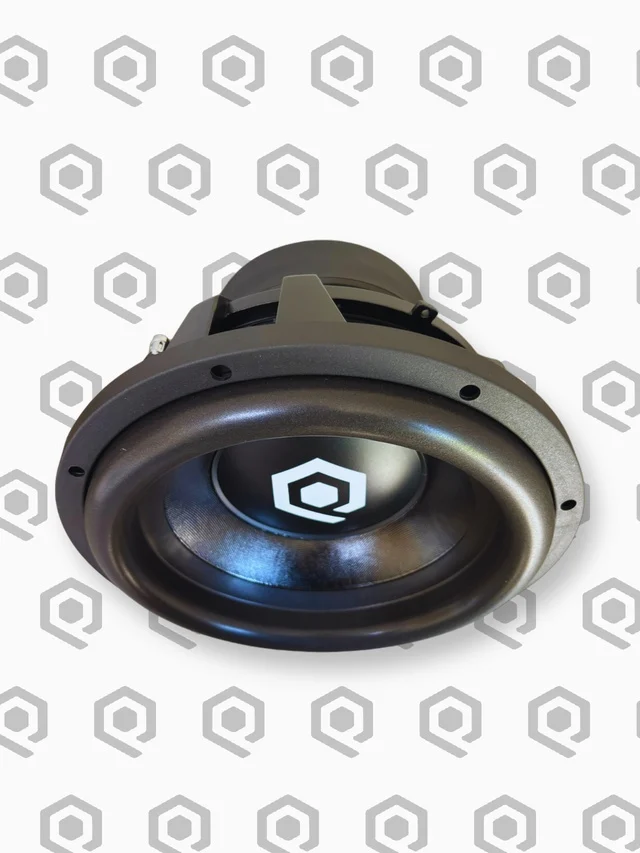
“How many subs should I run?” is probably the question I hear most at the counter, right after “how loud will it get?” The honest answer is that the number of subwoofers matters less than people think, and the power and box behind them matter more. But the number still matters, and picking wrong costs you trunk space, money, or bass you never get to hear.
Here’s how I walk customers through it.
Start With What You Actually Want
Before we talk about one sub or four, figure out which of these sounds like you:
- Daily driver, music first. You want the low end filled in so kick drums hit and bass lines have weight. You still need your trunk.
- Loud daily. You want people to hear you coming, but the car still gets you to work every day.
- Show or competition. You’re building a wall, chasing numbers, and you’ve already accepted that the back seat is gone.
Most people are in the first or second group. If that’s you, one or two good subs on the right amp will do more than you expect.
What Adding a Second Sub Really Does
Here’s the part most forum threads get wrong. Adding a second identical sub doesn’t double your loudness. The math works roughly like this:
- Two subs on the same total power as one (splitting the amp between them) gets you about 3 dB more output, because the cones couple and move more air together.
- Two subs where each one gets the full power the single sub had (so you doubled the amplifier too) gets you about 6 dB more.
For reference, 3 dB is a clear, noticeable step up. 6 dB is a big jump. Your ears read roughly 10 dB as “twice as loud,” so even going from one sub to four won’t make the car feel four times louder. It will feel a lot louder, though, and the subs will be working less hard to get there, which means less distortion and cooler voice coils.
That last part is the sneaky benefit. Two subs sharing the work each move less, so they stay cleaner at the same volume. A single sub running flat out at the edge of its excursion sounds strained. Two subs cruising at the same level sound relaxed.
One Sub: Who It’s For
A single sub is the right call for a lot more builds than people want to admit. If you drive a sedan, a small hatch, or a single cab truck, one well-powered 10 or 12 in the right enclosure will fill the cabin. Small cabins pressurize easily. You don’t need a wall to feel bass in a Civic.
One sub also keeps the electrical side simple. You’re not pushing your alternator as hard, you may not need a Big 3, and your amp choice is easy.
If you want a single sub that can take real power, the HDS3.3 12″ Dual 2 Ohm (1,500W RMS) is a strong pick. One of those on a properly matched mono amp will hit harder than a lot of cheap dual-sub setups.
Two Subs: The Sweet Spot
Two subs is where most of my installs land, and for good reason. You get that extra 3 to 6 dB, the load is easy to wire, and a dual enclosure still fits in most trunks and behind most truck seats with the right box.
Two 10s or two 12s is the classic “loud daily” setup. Two 10s often fit where a single 15 won’t, and they react quickly. Two 12s dig a little deeper and move more air overall.
If you don’t want to build or source a box, the HDB2 Dual 10″ Loaded Ported Box (Dual 4 Ohm, 800W RMS) takes the guesswork out. Subs are already mounted in a ported enclosure, so you’re down to wiring and an amp.
Wiring Two Dual Voice Coil Subs
This is where people get tripped up. The final ohm load depends on how you wire the coils and the subs together. Here are the common combinations:
| Setup | Wiring | Final Load |
|---|---|---|
| 1 x Dual 2 ohm | Coils in series / coils in parallel | 4 ohm / 1 ohm |
| 1 x Dual 4 ohm | Coils in series / coils in parallel | 8 ohm / 2 ohm |
| 2 x Dual 2 ohm | Coils in series on each sub, subs in parallel | 2 ohm |
| 2 x Dual 4 ohm | Coils in parallel on each sub, subs in parallel | 1 ohm |
| 2 x Dual 4 ohm | Coils in series on each sub, subs in parallel | 4 ohm |
| 4 x Dual 2 ohm | Coils in series on each sub, all subs in parallel | 1 ohm |
| 4 x Dual 4 ohm | Coils in parallel on each sub, all subs in parallel | 0.5 ohm |
Always check that your amp is stable at the load you end up with. If you want to try different combinations before you start stripping wire, run them through our Ohm Load Calculator. It’ll save you a fried amp.
Four Subs (and Up): Know What You’re Signing Up For
Four subs is a commitment. It’s awesome when it’s done right, and a money pit when it isn’t. Before you go there, be honest about three things:
Electrical
Four subs means a big amp, or two amps, pulling serious current. At that point a Big 3 is the minimum, and plenty of builds need a high-output alternator, extra batteries, or both. If your headlights dim at a red light now, adding more subs will make it worse, not better.
Space
Four 12s in a ported box can eat a whole SUV cargo area or the back seat of a sedan. Trucks are tougher. Measure first, then pick the sub size.
Box Design
Four subs in a poorly designed box often sound worse than two in a good one. Port area, net volume, and tuning all get more critical as you scale up. This is where working with an experienced shop really pays off.
If you’re going big, the SoundQubed C-Series monoblocks like the C1-5300 are built for multi-sub setups. Match the amp’s rated output at your final ohm load to the combined RMS of your subs, not the max number on the box.
Power Is the Real Multiplier
I’ve seen a single sub on a strong amp outplay two subs on a weak one more times than I can count. Doubling sub count without adding power just splits what you already had. You get the 3 dB from cone coupling, and that’s it.
A good rule: figure out your power budget first, then decide how many subs to spread it across.
- Your amp makes around the same RMS as one sub’s rating? Run one sub.
- Your amp makes roughly double a single sub’s rating? Two subs will use it well.
- You’re planning a multi-thousand-watt build? Now four subs starts making sense.
If you’re trying to match an existing sub to a new amp or figure out what you’ve got sitting in an old box, our Woofer Lookup tool can pull up the specs.
Vehicle Size Matters More Than You’d Think
Cabin size changes everything. A small car gets a natural boost in the low end from the cabin itself (installers call it cabin gain), so one sub can sound huge. A big SUV or a crew cab has a lot more air to move, and that’s where two or more subs really earn their keep.
Rough starting points I give customers:
- Compact car or single cab truck: one 10 or 12.
- Midsize sedan or extended cab: one 12, or two 10s.
- Full-size SUV, crew cab, or van: two 12s, or a single 15 if space is tight.
- Dedicated loud build: four subs, matched with the electrical upgrades to back them up.
These aren’t rules carved in stone. They’re where I’d start before we talk about your music, your budget, and how much space you’ll give up.
FAQ
Is one 15″ sub better than two 12s?
Two 12s have more total cone area than a single 15, so with enough power they’ll usually get louder. A single 15 can be easier to fit and box, and it can dig deep. If you have the room and the power, two 12s generally win on output.
Can I add a second sub to my existing setup?
Yes, as long as it’s the same model and coil configuration as your first one, and your amp is stable at the new final load. Mixing different subs in the same box usually ends badly.
Do more subs mean better sound quality?
Often, yes. Each sub moves less to reach the same volume, so you get less distortion. The box and tuning still matter more than sub count for overall sound.
Do I need a Big 3 for two subs?
It depends on your total power, not the sub count. Around the 1,000 to 1,500 watt range, a Big 3 is a smart, cheap upgrade. Beyond that, plan on it.
Ready to Pick Your Setup?
Whether you land on one sub or four, get the power and the box right and you’ll be happy with the result. Browse subwoofers, amps, and wiring at the SoundQubed shop and buy direct at soundqubed.com, or find a local installer who can build it right with our Dealer Locator.