
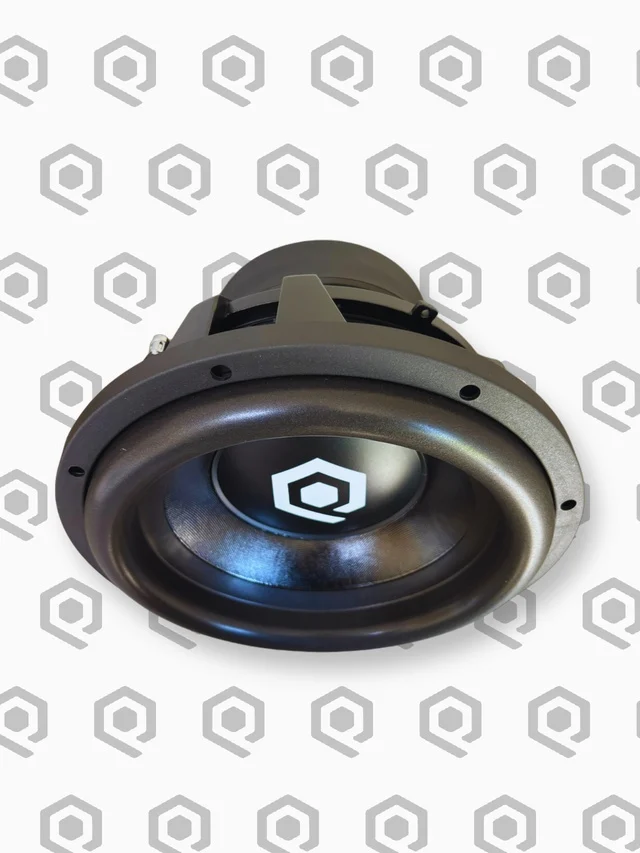
You just bolted a fresh sub into the box, wired it up, and the first thing every guy at the shop tells you is “don’t beat on it yet, break it in first.” Then somebody else on a forum says break-in is a myth. Both of them are kind of right, and that’s why the question keeps coming up.
Here’s how we look at it after a lot of installs: a new subwoofer does change during its first stretch of use, the change is real but modest, and the main reason to take it easy early has more to do with catching install mistakes than with the woofer itself. Let’s go through what’s actually happening and how to do it without wasting a week.
What “Break-In” Actually Means
A subwoofer cone is held in place by two flexible parts: the surround (the rubber or foam ring at the outer edge) and the spider (the corrugated fabric disc under the cone, near the voice coil). Together they’re the suspension. They’re what pulls the cone back to center after every stroke.
Out of the box, the spider is stiff. It’s usually a treated cloth that’s been formed under heat, and it hasn’t flexed much yet. As the sub plays, that material loosens up a bit. The suspension gets slightly more compliant, the cone moves a little more freely, and the woofer’s resonant frequency (Fs) tends to drift down some.
In practice that shows up as:
- Slightly deeper, smoother low end after the first several hours of play
- Less of a “tight and choked” feeling on long bass notes
- A sub that behaves closer to the parameters the box was designed around
What it won’t do is turn a sub in the wrong enclosure into a good one, fix a bad gain setting, or add output that the amp and electrical system can’t supply. Break-in is fine tuning. It isn’t magic.
Is Breaking In a Sub Really Necessary?
Short answer: the sub will break itself in whether you do anything special or not. Every song you play loosens that spider a little. So the real question is whether you should go easy for the first few days, and we say yes, for three practical reasons.
1. A stiff suspension doesn’t love full power on day one
When the spider is at its stiffest, cranking the system to the limit right away puts more stress on the glue joints and the suspension than it needs to. Most new subs handle it fine. Still, there’s no upside to finding out the hard way.
2. New installs hide problems
This is the big one. The first few days are when a loose ground, a rubbing coil from a screw that’s too long, an air leak in the box or a gain that’s set too hot shows up. If you’re playing at moderate volume, you hear the problem before it cooks something. If you’re running it wide open, you hear it as smoke.
3. You’ll set gains better on a settled sub
A sub that’s had some hours on it plays a little differently than one fresh out of the carton. If you tune your gain, LPF and subsonic filter after break-in, you’re tuning the system you’ll actually be living with.
How to Break In a New Subwoofer
You don’t need special test tracks or a tone generator. Normal music works. Here’s the routine we’d give a customer picking up a fresh install.
- Check the wiring before anything plays. Confirm the final impedance matches what the amp is rated for. If you’re not sure how your dual voice coil sub wires down, run the numbers through our ohm load calculator first.
- Start with the gain low. Turn the amp gain most of the way down, bass boost off, and set the subsonic filter if your amp has one. You can bring things up later.
- Play bass-heavy music at a moderate level. Loud enough that the cone is clearly moving, not so loud that you’d call it “hitting.” Think comfortable daily volume.
- Put in the hours. Somewhere in the range of 10 to 20 hours of normal play is plenty for most subs. For most people that’s a week or two of commuting.
- Step it up gradually. After the first few days, increase volume a bit at a time. Listen for any distortion, rubbing or rattles as you go.
- Set your gain properly at the end. Once the sub has loosened up, do your real gain setting. Our guide on how to set amp gain without blowing your subs walks through it.
What about the tone method?
Some installers like to play a low sine wave, usually in the 20 to 40 Hz range, at low power for a set time. It works, and it’s useful for a shop that wants to loosen a sub up before a customer picks the car up. For a daily driver, music does the same job and you get to enjoy it in the meantime. If you do use tones, keep the level modest and don’t leave a sealed car playing a constant tone for hours unattended. Heat builds up in the voice coil fast on a steady signal.
Break-In Time by Sub Type
There’s no exact number, but bigger, stiffer suspensions take longer to settle than small, light ones. Here’s a rough guide we use.
| Sub type | Example | Typical break-in | Notes |
|---|---|---|---|
| Daily-driver 8″–12″ | HDB2.2, HDS2.3 | About 10 hours of normal play | Lighter suspension settles quickly |
| Mid-power 10″–15″ | HDS3.3 | 10–20 hours | Stiffer spiders, more excursion to loosen |
| High-excursion SPL 12″–18″ | HDX3.2, HDX4.2 | 20+ hours, ramping power slowly | Heavy-duty suspension built for big power |
Take those as ballpark numbers. If the sub sounds clean and you’ve been playing it for a week or two, you’re there.
Mistakes That Do More Harm Than Not Breaking It In
Most damaged subs we see didn’t fail because someone skipped break-in. They failed because of setup. Watch for these:
- Gain cranked to “max” as a volume knob. Gain matches the amp to your head unit’s signal. Turning it all the way up just sends clipped signal into the coil.
- Bass boost stacked on bass boost. Head unit EQ plus amp bass boost plus a loudness setting adds up to a lot of distortion fast.
- No subsonic filter in a ported box. Below the port tuning, the cone unloads and can over-travel. A subsonic filter keeps it in check.
- Wrong impedance. Wiring a sub below what the amp can handle overheats the amp. Wiring it way above leaves you underpowered and tempted to crank the gain.
- Weak electrical. If your headlights pulse with the bass, voltage is dropping and the amp clips earlier. That’s an electrical fix, not a break-in issue.
Matching the Sub to the Amp From the Start
Break-in goes a lot smoother when the sub and amp are sized for each other. You want an amp that can deliver close to the sub’s RMS rating at the final impedance, so you’re not clipping a small amp to get volume.
A few common pairings we set up all the time:
- A single HDS2.3 12″ dual 2 ohm (800W RMS) makes a solid daily setup for someone who wants strong, clean bass without rewiring the whole car.
- The HDS3.3 12″ dual 2 ohm (1,500W RMS) is the step up for people who want to feel it from outside the car, paired with a mono amp like the C1-2100 monoblock once you confirm its output at your wired load.
- The HDX3.2 12″ dual 2 ohm (2,500W RMS) is a high-excursion sub built for big power. This is the one where slow, patient break-in really pays off, because the suspension is built stiff to control all that cone travel.
Not sure what you’ve got in the trunk or what it’s rated for? Our woofer lookup can help you pull up the details on a SoundQubed sub.
Signs Something’s Wrong (Not Just “Still Breaking In”)
A sub that’s still loosening up sounds a little tight. It doesn’t sound broken. If you hear any of these, stop and troubleshoot instead of playing through it:
- Scraping or rubbing sound on low notes, especially at low volume
- Bass that cuts in and out, or an amp that keeps going into protect
- A burning smell from the box or amp
- Cone that sits off-center or won’t move evenly when you gently press it with your palms flat
- Distortion that shows up at volume levels that were clean yesterday
Any of those points to wiring, box or power issues, or a damaged coil. Break-in won’t fix them, and more hours will just make them worse.
SoundQubed Black Friday Sale
If you’ve been waiting to upgrade, now’s a good time: 30% off SoundQubed subs, amps and speakers through Nov 30, no code needed. It’s a real discount off our everyday prices, no inflated “was” prices.
FAQ
How long does it take to break in a subwoofer?
For most daily-driver subs, about 10 to 20 hours of normal listening at moderate volume. Bigger high-excursion subs can take longer, so ramp the power up slowly over a couple of weeks.
Can I blow a new sub by not breaking it in?
It’s possible but not common. Subs usually fail from clipping, wrong impedance or too much power, not from skipping break-in. Taking it easy early mostly protects you from install mistakes you haven’t caught yet.
Should I break in my sub inside the box or outside?
Inside the box it’ll live in. The enclosure controls cone movement, so playing a sub free-air at any real volume risks over-excursion. Mount it, wire it, then break it in.
Do speakers and midranges need break-in too?
They loosen up a bit as well, but the change is smaller because the suspensions are lighter. Moderate volume for the first few days is still a good habit with any new install.
Will my sub sound louder after break-in?
Usually a little deeper and smoother more than louder. If you want a big jump in output, look at power, electrical upgrades and box design.
Ready for a New Sub?
Starting fresh or adding to what you’ve got? You can buy direct at soundqubed.com and get the sub, amp and wire from one place. If you’d rather have a pro handle the install and tuning, find a shop near you with our Dealer Locator.