
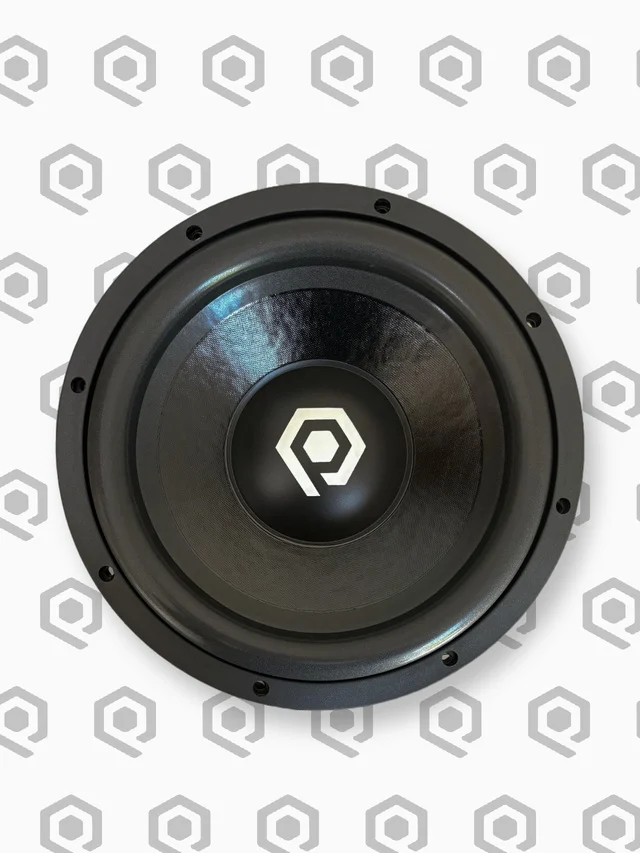
Most people shopping for a 12″ sub are not building a competition car. They want bass that hits hard on the way to work, sounds clean at a reasonable volume, still leaves room for groceries, and doesn’t kill the battery in the parking lot. That’s a daily driver, and it changes what “best” means.
I’ve put a lot of 12s in a lot of commuter cars, trucks and SUVs. The ones that make owners happy a year later aren’t always the biggest numbers on the box. They’re the ones matched to the car’s electrical system, the space available, and how the owner actually listens. Here’s how to pick.
Why a 12 Is the Daily Driver Sweet Spot
A 12-inch sub moves noticeably more air than a 10 without needing the box volume of a 15. In most sedans and hatchbacks a single 12 fits in a box that leaves usable trunk space, and in a crew cab truck it can live behind or under the rear seat with the right enclosure.
It’s also the most forgiving size for mixed music. A good 12 can play tight enough for rock and country and still get low enough for rap and EDM. If you want the full size breakdown, we covered it in 8″ vs 10″ vs 12″ vs 15″ subwoofers. For most daily drivers, 12 is where I start the conversation.
What Actually Matters for a Daily Driver
1. RMS power you can support every day
Ignore max wattage when you’re choosing a daily sub. RMS is the number that tells you how much continuous power the woofer is built to handle, and it’s the number your amp and electrical system have to keep up with.
Here’s the part people skip. A Class D amp is efficient, but it still pulls real current. Rough math: an amp making 1,000 watts RMS at full tilt can draw somewhere around 90 amps from the charging system. You won’t sit at full power on normal music, but the peaks are what dim your headlights. On a stock alternator, staying in the 400 to 1,000 watt RMS range is the comfortable zone for a single 12. Go past that and you’re looking at a Big 3 upgrade at minimum, maybe more.
2. Box size vs cargo space
A daily driver has to stay useful. Before you fall in love with a sub, measure the space you’re willing to give up. A sealed box for a 12 is usually much smaller than a ported box for the same woofer. Ported gets louder per watt but eats more trunk.
My rule: if the car hauls kids, gear or work tools, lean toward a compact sealed box or a loaded enclosure built for the job. If the trunk is mostly empty, ported is on the table. There’s more on that tradeoff in our sealed vs ported guide.
3. Impedance that matches a sensible amp
Most daily-friendly 12s are dual voice coil, usually dual 2 ohm or dual 4 ohm. That matters because it decides the final load your amp sees:
- One dual 4 ohm sub wires to 2 ohm (parallel) or 8 ohm (series).
- One dual 2 ohm sub wires to 1 ohm (parallel) or 4 ohm (series).
- Two dual 4 ohm subs can land at 1 ohm or 4 ohm depending on how you wire them.
Pick the sub’s coil configuration to land on a load your amp is stable at and makes good power into. If the wiring math gets confusing, plug it into our ohm load calculator before you buy anything.
4. Build quality that survives heat, cold and potholes
A daily driver lives in a trunk that hits 140 degrees in July and freezes in January. Suspension gets stiffer in the cold, glue joints take a beating from heat, and every pothole is a shock load. Look for a solid basket, a well-vented motor, and a surround and spider that are built for the RMS rating rather than barely scraping by. Running a sub well inside its RMS rating also makes it last a lot longer than running it at the edge.
Daily Driver 12s by Power Level
Here’s how I’d group SoundQubed 12s for street use. These specs come straight from the product listings.
| Subwoofer | Coil options | RMS / Max | Best fit |
|---|---|---|---|
| HDB2.2 12″ | Dual 2 or dual 4 ohm | 400W / 800W | Stock electrical, first system, small trunks |
| HDS2.3 12″ | Dual 2 or dual 4 ohm | 800W / 1,600W | Stock or lightly upgraded electrical, the all-rounder |
| HDS3.3 12″ | Dual 2 or dual 4 ohm | 1,500W / 3,000W | Big 3 done, more output, still daily-able |
Above that you’re into the HDX line, which is built for people chasing serious output and willing to build the electrical system to match. Great woofers, but that’s a different conversation than daily driving.
The budget build: HDB2.2 12″
The HDB2.2 12″ dual 2 ohm is rated at 400 watts RMS, which a stock charging system handles without drama. It’s the sub I point people toward when the goal is “fill in the bottom end the factory system is missing” without rewiring the whole car. Put it in a sealed box and it plays tight and clean. If you’d rather not shop for an amp separately, the Starter Bass 12″ package pairs it with a C1-1100 monoblock.
The all-rounder: HDS2.3 12″
If someone asks me for one daily driver 12 with no other details, this is usually the answer. The HDS2.3 12″ dual 2 ohm handles 800 watts RMS, which is enough to be properly loud in a sedan or SUV while staying in a power range most vehicles can feed with good wiring and a solid ground. It works sealed for a tighter sound or ported if you want more output and have the room.
More output, still street-friendly: HDS3.3 12″
At 1,500 watts RMS, the HDS3.3 12″ is where daily driving starts to blur into “my car is a little bit of a project.” It’s still very livable, but plan on the Big 3 and a healthy battery. The Loud Bass 12″ package matches it with a C1-2100, which takes the guesswork out of pairing.
What About a Powered Enclosure?
For some daily drivers, the best 12 is one that comes with the amp built in. If you’re keeping a factory radio, don’t want to run a big amp rack, or need the install to come out easily, a loaded powered box is hard to beat. The HDS2 12″ powered wedge is a good example: the woofer, box and amplifier are matched at the factory, and the wedge shape tucks into a trunk or behind a truck seat better than a square box.
You give up some flexibility and ultimate output compared to a separate sub and amp, but you also skip most of the matching work. We broke down the pros and cons in powered sub vs separate sub and amp.
Install Details That Make or Break a Daily Setup
The sub is maybe half the result. The rest is install. A few things I check on every daily build:
- Real wire, properly sized. Undersized or cheap wire turns into heat and voltage drop. Match gauge to the amp’s current draw and run length.
- A clean ground. Bare metal, short run, same gauge as the power wire. Most “my amp keeps cutting out” calls trace back here.
- Gain set with a plan. The gain knob is not a volume knob. Set it to match the head unit’s output so you aren’t feeding the sub clipped signal.
- A subsonic filter. Especially on ported boxes. It keeps the woofer from flopping around below tuning, which is how a lot of daily subs die.
- Rattle control. License plate, trunk lid and rear deck buzz will make a great sub sound cheap. A little deadening goes a long way.
Not sure your factory location or existing box will take a particular woofer? Check fitment and specs with the woofer lookup tool before you order.
My Short Answer
For most people with a stock or lightly upgraded car, an 800 watt RMS 12 in a box sized for the vehicle is the sweet spot. It’s loud enough to feel, small enough to live with, and easy enough on the electrical system that you won’t be chasing dimming lights. Go smaller on power if you’re keeping everything stock and want it simple. Go bigger only when you’re ready to do the electrical work that comes with it.
FAQ
Can I run a 12″ sub on a stock alternator?
Yes, within reason. A sub in the 400 to 800 watt RMS range with proper wiring and a good ground runs fine on most stock charging systems. Past that, start with the Big 3 and check your battery health.
Is dual 2 ohm or dual 4 ohm better for a single sub?
Neither is better on its own. It depends on the amp. A single dual 2 ohm wires to 1 or 4 ohms, a single dual 4 ohm wires to 2 or 8 ohms. Pick the version that lands on a load your amp is stable at and makes its best power into.
Sealed or ported for a daily driver?
Sealed if you want tight, accurate bass and need your cargo space. Ported if you want more output per watt and can give up the room. Both work great when the box is built for the woofer.
Will a 12″ sub drain my battery?
Not while the engine is running and the system is installed right. Playing it loud with the engine off is what drains batteries. Make sure the amp’s remote turn-on wire is tied to an ignition-switched source so it shuts off with the car.
Ready to Build Yours?
Browse the full lineup of subs, amps and loaded enclosures in the SoundQubed shop and buy direct at soundqubed.com. Rather have a pro handle the install? Find a local shop that carries SoundQubed with our Dealer Locator.