
A Wrangler is one of the hardest vehicles we work on, and one of the most fun. You’ve got a boxy cabin with almost no sound deadening, a roof that comes off, doors that come off, a cargo area full of gear, and road and wind noise that would drown out a jet engine on the highway. The factory system was built to be cheap and survive weather, not to sound good at 70 mph with the top down.
The good news: Jeeps respond really well to the right upgrades. Below is how we approach a Wrangler build, from the first speaker swap to a full system with a sub and amp, plus the mistakes we see over and over.
Why Wrangler Audio Is Different
Most car audio advice assumes a sealed cabin. A Wrangler breaks most of those assumptions.
- Open-air listening. With the top or doors off, there’s no cabin gain. Bass that sounds huge in a closed sedan just disappears. You need more output, not less.
- Moisture. Rain, wash days, river crossings and morning dew all find their way inside. Paper cones and exposed connections don’t last.
- Noise floor. Mud tires, a soft top flapping and wind around the windshield raise the noise floor a lot. Speakers that sound fine parked can vanish once you’re moving.
- Removable parts. Speaker and amp locations have to stay put when the doors come off. That’s one reason the factory speakers live in the dash and sound bar instead of the doors.
- Limited space. There’s no real trunk, and whatever box you install has to share room with recovery gear, coolers and the dog.
Know What Speakers You’re Starting With
On the JK and JL generations, most of the factory speakers are 6.5-inch units in the lower dash and the overhead sound bar, with smaller tweeters or mids up in the dash on some trims. The exact layout changes by year, trim and audio package, so check before you buy. If your Jeep came with a premium package, it may also have a factory sub and an amp that you’ll have to work around.
Pull a grille, look at the speaker, and measure mounting depth. The sound bar especially can be shallow, and a speaker with a big magnet won’t always clear. Five minutes with a tape measure saves a return shipment.
Step 1: Replace the Front Speakers
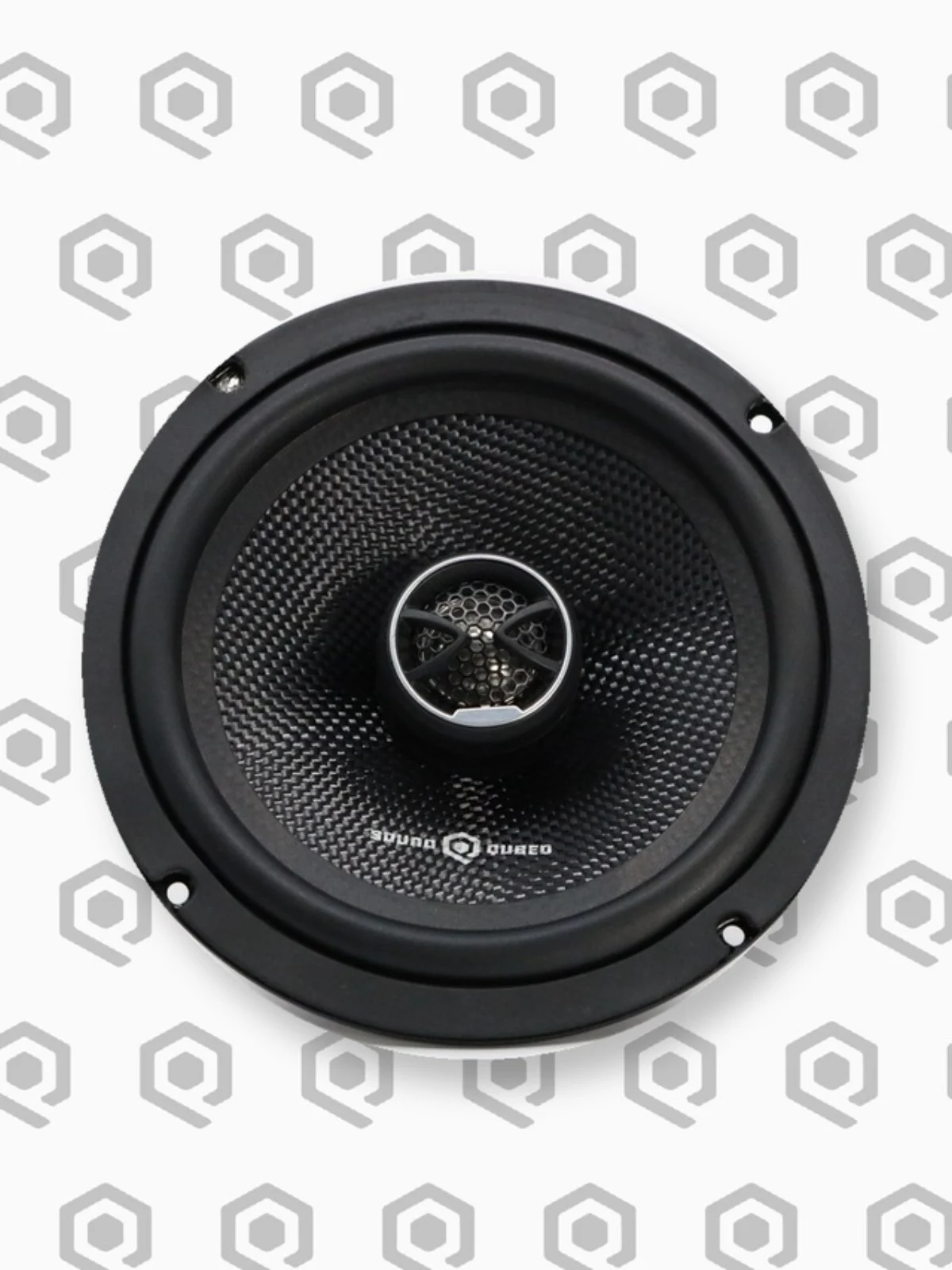
If you only do one thing, do this. The front stage is what you hear most, and factory Jeep speakers break up early. A quality 6.5-inch coaxial like the SoundQubed HDX 6.5″ Coaxial Speakers is a direct swap in most locations and gets louder and cleaner than stock, even on head unit power.
Head unit power only goes so far, though. Plan on adding an amp later, and buy speakers that can handle it when you do.
Moisture-Friendly Options
For Jeeps that see real weather, we like speakers built for it. The HDS 6.5″ Midbass Speaker is rated 150W RMS at 4 ohms and has a water-resistant cone, which matters a lot more in a Wrangler than in a daily-driver sedan. Pair midbass drivers like that with tweeters up high and you get a front stage that can keep up with the wind.
Step 2: Add a 4-Channel Amplifier
This is where a Jeep system starts to come alive. A 4-channel amp gives your front and sound bar speakers real power, so they stay clean at volume instead of distorting when you need them most.
The SoundQubed C4-500 4-Channel Amplifier is a good fit for most Wrangler speaker setups. It’s compact enough to mount under a front seat or behind the rear seat, which keeps it dry and out of the cargo area.
A few install notes for Jeeps:
- Mount the amp off the floor if you can. Water pools on Wrangler floors, especially if you’ve ever pulled the drain plugs.
- Give it airflow. Don’t bury it under a pile of gear or seat covers.
- Use the high-pass filters on all four channels. Cutting deep bass out of the 6.5s lets them play louder without bottoming out.
Keeping the Factory Radio
Plenty of Wrangler owners want to keep the factory touchscreen for the camera, steering wheel controls and climate settings. That’s fine. A line output converter takes the factory speaker signal and turns it into RCA outputs for your amp. For a four-speaker setup plus sub, a multi-channel LOC like the Q-LOC5 Active Line Output Converter handles it in one box. We covered how these work in detail in our guide to adding an amp to a factory radio.
Step 3: Add a Subwoofer
Wranglers have almost no low end from the factory, and in an open cabin you lose even more. A sub is what fills in the bottom and makes the whole system sound full instead of thin.
Where to Put It
Space is the real challenge. These are the locations we use most:
- Cargo area, against the rear seat. The easiest spot. A single 10 or 12 in a compact box fits and still leaves room for gear.
- Under or behind the rear seat (4-door). Shallow custom boxes can tuck in here on Unlimited models.
- Side of the cargo area. Custom fiberglass or corner boxes work well, especially on 2-door models where floor space is tight.
Strap or bolt the box down. A loose sub box in a Jeep on a trail is a projectile.
Which Size and Setup?
| Your Wrangler | Suggested Sub Setup | Why |
|---|---|---|
| 2-door, gear in the back | Single 10″ in a compact box | Smallest footprint that still adds real bass |
| 4-door daily driver | Single 12″ sealed or ported box | Good output without giving up the cargo area |
| Top-off, loud system | Ported 12″ or dual 10s | Ported boxes play louder per watt, which helps in an open cabin |
| Minimal install | Powered enclosure | Sub, box and amp in one unit, fewer wires to run |
For a lot of Jeep owners, a loaded enclosure is the cleanest way to go. The HDB2 Single 10″ Loaded Ported Subwoofer Box (dual 2 ohm, 400W RMS) is compact enough for a 2-door and gives you the extra efficiency of a ported box. If you’d rather skip the separate mono amp entirely, a powered enclosure like the HDS2 10″ Loaded Powered Subwoofer Enclosure keeps the install simple.
Going with a separate sub and amp? Run your numbers through the Ohm Load Calculator before you wire anything so your mono amp sees a load it’s stable at.
Step 4: Power and Wiring
Wranglers have a decent electrical system, but a loud stereo adds up fast. A few things we always check:
- Power wire size. Match the gauge to your total amp current and the length of the run. The battery is under the hood and the amps are usually in back, so the run is longer than people expect.
- Firewall pass-through. Use an existing grommet when possible and seal it. A Jeep that fords water can’t have an open hole in the firewall.
- Grounds. Sand to bare metal on the body, keep it short, and seal it afterward to fight corrosion.
- Fuse near the battery. Within 18 inches of the battery terminal, every time.
- Big 3. If your lights dim on bass hits once the system’s in, a Big 3 upgrade is the first fix to look at.
Sound Deadening: Worth It in a Jeep?
Yes, with realistic expectations. You’ll never make a Wrangler quiet, especially with a soft top. But deadening the floor, the cargo area and the panels around the sound bar cuts rattles and lowers road noise enough that your system doesn’t have to work as hard. The cargo floor and rear wheel wells are the biggest wins for the effort. A mat like Q-Mat goes down fast and helps tighten up the sub too.
Common Wrangler Audio Mistakes
- Buying speakers too deep for the sound bar and finding out after the old ones are out.
- Mounting the amp flat on the floor where water collects.
- Leaving a sub box loose in the cargo area.
- Cranking the gain to compete with the wind and clipping the speakers. Set gains properly and let the amp do the work.
- Skipping the high-pass filter on the 6.5s and blaming the speakers when they distort.
Frequently Asked Questions
What size speakers are in a Jeep Wrangler?
Most JK and JL Wranglers use 6.5-inch speakers in the lower dash and sound bar, with smaller drivers in the upper dash on some trims. It varies by year and audio package, so pull a grille and measure depth before ordering.
Can I keep my factory radio and still add an amp?
Yes. A line output converter turns the factory speaker outputs into RCA signal for your amp, so you keep the touchscreen, camera and steering wheel controls.
Will a subwoofer still sound good with the top off?
It will sound different, because you lose the cabin pressure that boosts bass in a closed vehicle. Plan for more output than you’d use in a sedan. A ported box helps, and so does a little extra power.
Where’s the best place to mount an amp in a Wrangler?
Under a front seat or behind the rear seat, raised off the floor with room to breathe. Keep it away from spots where water collects.
Do I need to upgrade my alternator?
For a typical speaker upgrade plus a single sub, usually not. If you’re running high power and your lights dim or voltage drops on bass notes, start with the Big 3 and go from there.
Build Your Wrangler System
A Jeep that sounds good with the top off is a different kind of fun. Start with the front speakers, add a 4-channel amp, then drop in a sub when you’re ready. You can buy direct at soundqubed.com, or if you’d rather have a pro handle the install, find a shop near you with our Dealer Locator.